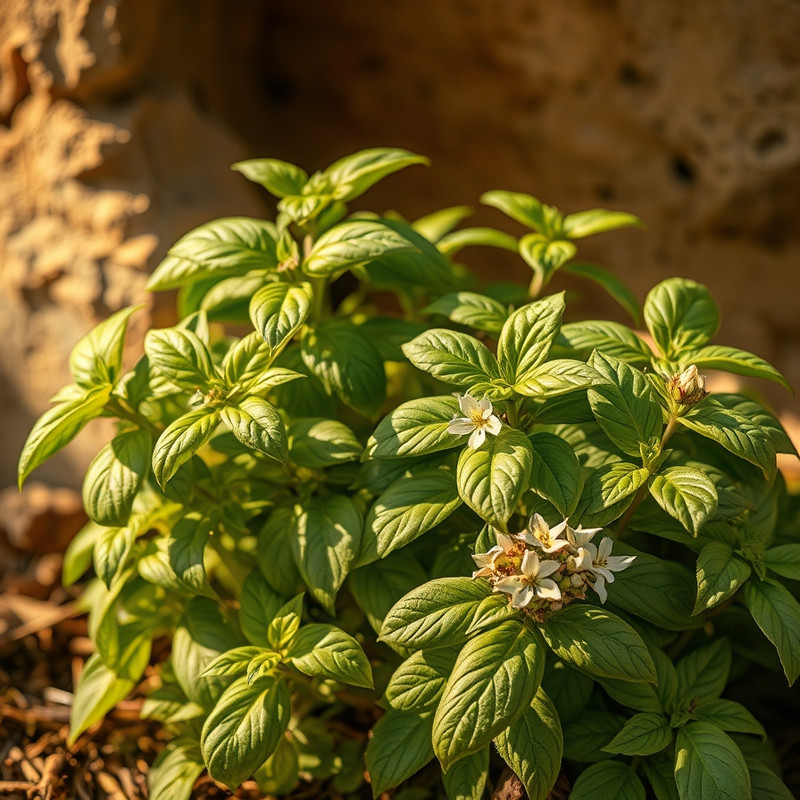
Basil
Description
Herb that can reach up to 2 meters in height (O. micranthum). Leaves strongly scented, pale green, or green/purple. Flowers are white or purple.
Key Properties & Benefits
Antibacterial, antifungal, antidiarrheal. Healing, anesthetic, stimulant. It is considered a warming plant. It stimulates gastric secretions.
Basic Uses
Treats abdominal pain, menstrual cramps, sore throat/tonsillitis, gingivitis, vaginal discharge, wounds, ulcers, abscesses, fungal infections (candidiasis, ringworm). Condiment.
Cultural Significance
It is a key ingredient for a preparation that is taken on the First Friday of March (Witch's Day) in the region of Catemaco, Veracruz, along with rue, skunk herb and crucetillo.
Spiritual & Ceremonial Use
It is a symbol of love, prosperity, and good luck, and is used in rituals to attract financial abundance and foster healthy romantic relationships.
Preparation Methods
Decoction (30 grams of leaves in one liter of water). Paste of crushed fresh leaves (for abscesses). As a tea, along with sage and spearmint to relieve stomach pain.
Dosage Guidelines
Internal use: Drink a decoction of 30 g/L throughout the day. In mixtures for wounds/ringworm: 20 to 40 leaves per liter of water. For menstrual cramps, take one cup in the morning and another in the afternoon (mixed with Air Plant and Chamomile).
Precautions & Warnings
The internal use of purple basil (Ocimum sanctum) is not recommended for pregnant women. In high doses, the essential oil can be toxic to the central nervous system (CNS).
Ethical Harvesting
It is propagated by seeds or cuttings. Harvesting at the beginning of flowering and drying in the shade are recommended. Its cultivation should be promoted for a sustainable supply.