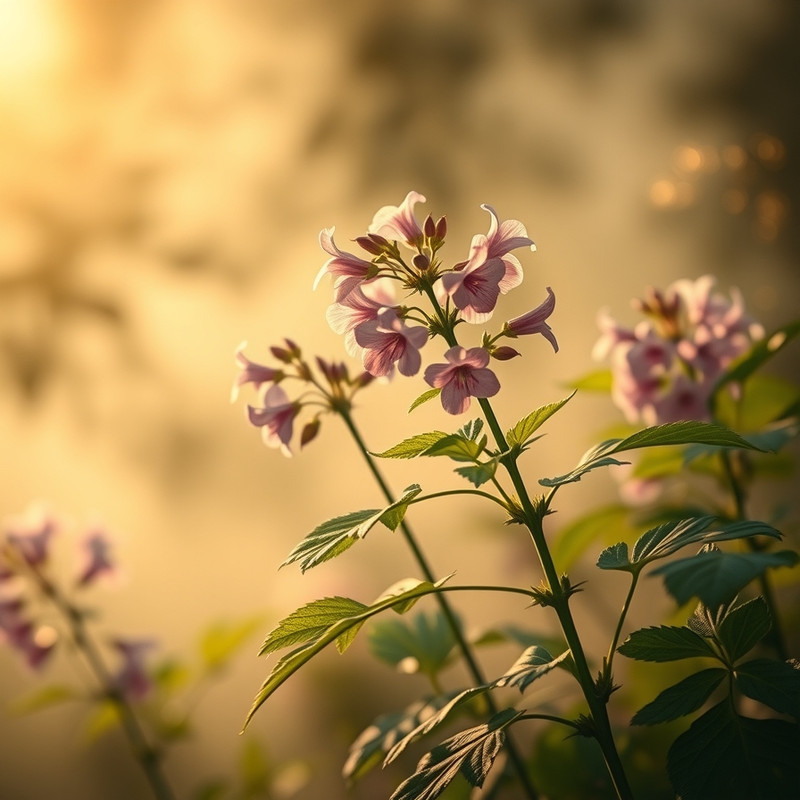
Mallow
Description
Biennial herb, erect or recumbent, branching from the base, 30-60 cm long, up to 70 cm tall. The leaves have rounded lobes. Flowers small, purple or white, with purple veins. The fruits are round, flat capsules.
Key Properties & Benefits
Emollient, laxative, chest soother, diuretic, diaphoretic. Contains mucilage and mineral salts.
Basic Uses
Internal Use: To treat gastritis, constipation, bronchitis, dry and wet coughs, cystitis, and oliguria. It is also used for stomach ulcers.
Cultural Significance
Mallow (Sida rhombifolia, an alternative common name) is used in Nayarit to ripen grains or sprouts, applying the decoction mixed with cow fat.
Spiritual & Ceremonial Use
For delayed menstruation (using Sida rhombifolia, or broom, also called mallow). In some traditions, it is used in baths or as incense to disperse negative energy and attract spiritual peace.
Preparation Methods
Infusions, baths, incense Internal Use (Gastritis, Cough): Diluted (5 leaves per cup). Internal Use
Dosage Guidelines
For Constipation/Purging: 20 leaves per liter of water. General Use: 3 to 5 cups daily. Pharmacopoeia Dosage: 3-5 g/cup in infusion. Take one cup of the water infused with nine sprigs for nine days.
Precautions & Warnings
It can cause poisoning and intoxication in grazing animals. It is considered a safe herb for human use when used properly.
Ethical Harvesting
The plant is obtained through wild harvesting, but managing and expanding growing areas is recommended to ensure a sustainable supply. The leaves are harvested at flowering and dried in the sun for one day, then in the shade for 3-5 days.