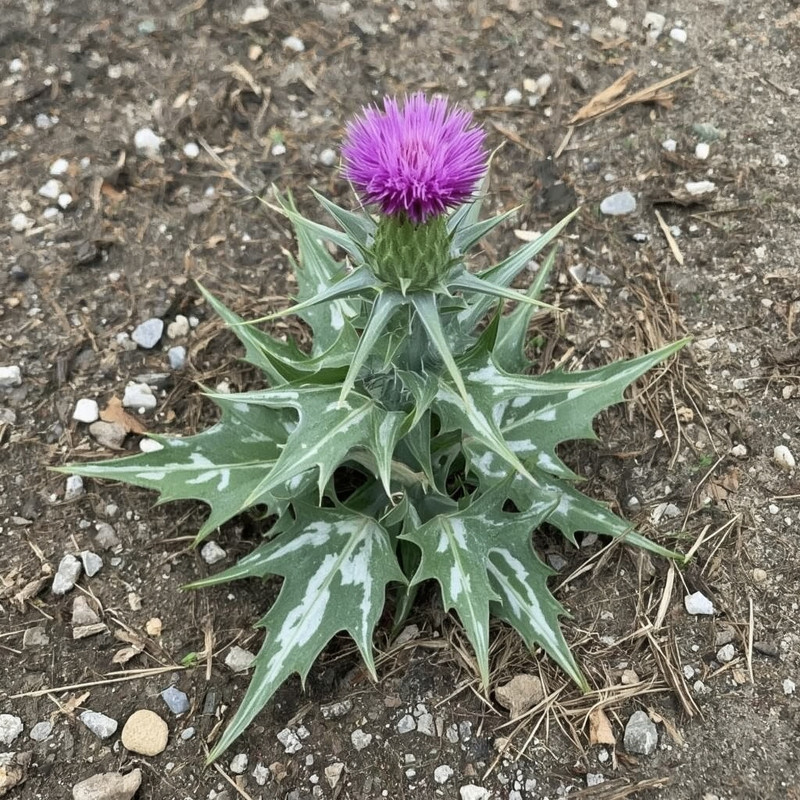
Milk thistle
Description
It is a biennial herbaceous plant. It has pinkish-purple flowers, clustered in large heads surrounded by sharp thorns. The leaves have spiny edges and white veins.
Key Properties & Benefits
Anti-hepatotoxic (liver protectant), cardiotonic, hypertensive, anti-hemorrhagic. Improves abdominal blood circulation. The leaf has fever-reducing and blood-purifying properties. Contains silymarin.
Basic Uses
Treatment of liver conditions, hemorrhages, varicose veins, and varicose ulcers. It is also used to treat splenic and respiratory conditions, hypotension, and leukorrhea. Based on its traditional use and supporting evidence, it is indicated for inflammatory processes and hyperlipidemia.
Cultural Significance
According to legend, the white veins of the leaves originated from the milk of the Virgin Mary. The Greeks used it before the Christian era. Think of Milk Thistle as a "natural liver guardian." Like a water filter that removes impurities, its active component, silymarin, works to protect and cleanse the liver. Although it's a robust and thorny plant (like a thistle), its reward (the seeds) contains the power to purify the blood and aid circulation.
Spiritual & Ceremonial Use
Milk thistle (Silybum marianum) holds a profound spiritual significance linked to the Virgin Mary, according to a medieval legend that recounts how drops of her milk fell on the plant's leaves as she breastfed Jesus while fleeing Herod, leaving the characteristic white veins and blessing it with healing properties. This Marian origin associates it with divine protection, maternal purity, physical and spiritual healing, and renewal, symbolizing resilience and new beginnings after adversity.
Preparation Methods
Decoction (Tea/Infusion): The crushed seeds are cooked. A decoction (infusion) is used along with other plants (artichoke, barajo, etc.) to purify the blood. Historically: The Greeks recommended the juice with honey to thin the bile.
Dosage Guidelines
For liver ailments/bleeding: Boil one teaspoon of crushed seeds in one cup of water and drink three cups a day: one in the morning, one at midday, and one at night. To purify the blood: Drink in the morning on an empty stomach for eight days (Adults: one glass; children over two years: half a glass).
Precautions & Warnings
The plant is not toxic, but therapeutic doses should be respected. Large doses of the fruit can cause nausea, vomiting, and dysentery.
Ethical Harvesting
The plant is cultivated in Guatemala and is obtained from hillsides and vacant land.