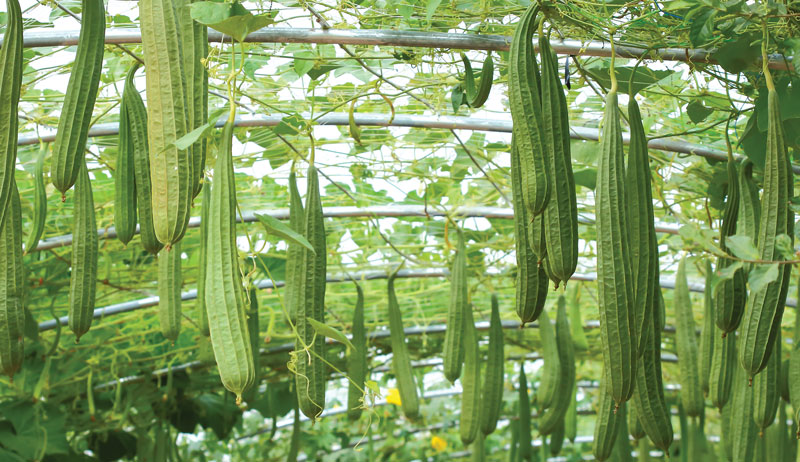
Luffa
Description
A climbing plant. The leaves are lobed, similar to those of a watermelon. The fruits are small and ovoid, with the surface covered in small spines. The inner pulp is fibrous, similar to a small loofah (pashte).
Key Properties & Benefits
It is a strong emetic. Traditionally, it is believed that "anything bitter is good for curing malaria."
Basic Uses
It is used to treat nasal congestion (colds), malaria, to relieve hangovers, and to alleviate sinusitis. It is one of the most frequently used medicinal species.
Cultural Significance
Its use for malaria is based on the belief that its bitter properties cure the disease.
Preparation Methods
For nasal congestion: 1. Inhale the steam released when boiling two dried pasties. 2. Inhale the smoke from a piece of pastie burning on embers with sugar. For malaria: Inhale the water infused with a peeled green pastie or with a dried pastie extinguished in boiling water. For sinusitis: Apply drops of the infusion to the nostrils.
Dosage Guidelines
For malaria: take a small glass daily for nine days of the steeped water. For nasal congestion/sinusitis: the dosage is not specified, but rather the method of inhalation or application of drops.
Precautions & Warnings
It is considered a very bitter plant. It is not recommended for pregnant women, as its use may be considered abortifacient. Extreme caution is advised if ingested, as it can cause severe vomiting.
Ethical Harvesting
The ethical harvesting of the loofah (Luffa sepium) is based on practices that respect the plant's natural cycle and ensure its regeneration. It is recommended to harvest loofah fruits only when they are fully ripe, that is, when the outer husk has dried and changed color (usually yellowish or brown), indicating that the inner fiber is ready to be used as a loofah sponge. Harvesting should be done carefully to avoid damaging the vine and excessive cutting, so as not to compromise its future growth.