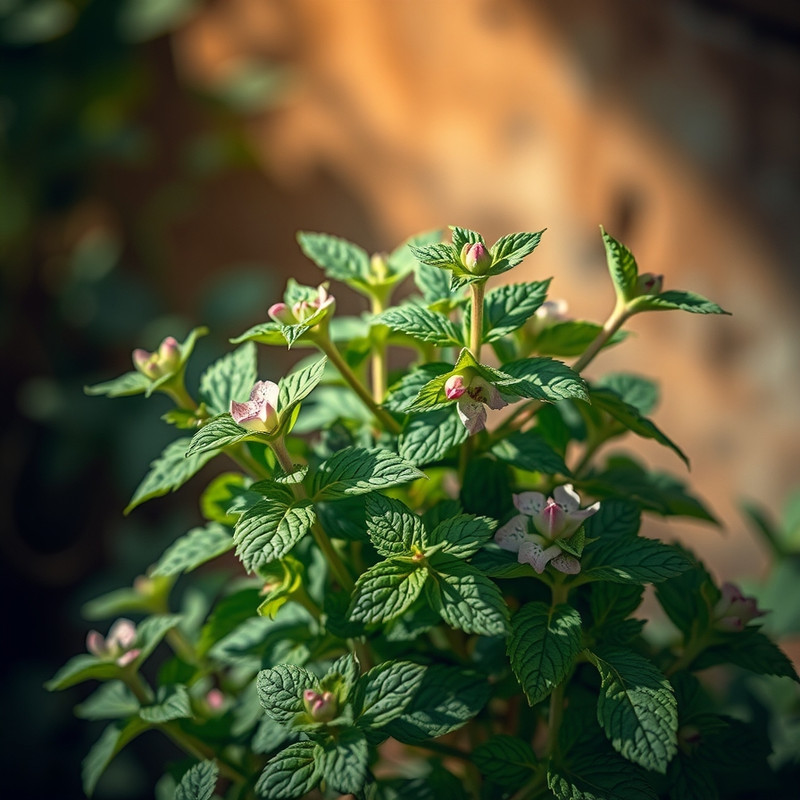
Peppermint
Description
Perennial aromatic herb with a square stem, green, toothed and glossy leaves, with white or purple flowers (M. piperita). It grows up to 1 m tall.
Key Properties & Benefits
Perennial aromatic herb with a square stem, green, toothed and glossy leaves, with white or purple flowers (M. piperita). It grows up to 1 m tall.
Basic Uses
Treat gastrointestinal conditions (stomach aches, vomiting, diarrhea, indigestion, colic), parasites, coughs and colds, period pain and headaches, condiment (salads, ceviches, soups).
Cultural Significance
A hybrid plant discovered in the 17th century. The genus name derives from the Greek nymph Mintha. Used by the ancient Egyptians and Hebrews.
Spiritual & Ceremonial Use
In ancient times, especially in Greece and Rome, mint was associated with the gods of healing and prosperity, considered a magical herb that purified the spirit and attracted good fortune through its refreshing and revitalizing aroma. In Feng Shui, mint is seen as a symbol of prosperity, vitality, and communication, improving harmony in the home and stimulating mental clarity and concentration. It is used in teas for stomach aches along with aloe vera, wormwood oil, garlic, Mexican tarragon, and cinnamon.
Preparation Methods
Infusion or Decoction. Decoction (for tea). Alcoholic (to improve digestion). Ointment (topically).
Dosage Guidelines
Internal use: 3 to 5 cups daily (using 3 to 5 sprigs per cup). It can be added to a glass of epazote decoction for stomach pain.
Precautions & Warnings
The tonic use of mint/spearmint may disrupt children's sleep. No toxic effects have been reported with traditional use.
Ethical Harvesting
It propagates by stolons or runners. It is cultivated both at home and commercially. The plant is harvested when in bloom. The leaves are dried in the shade.