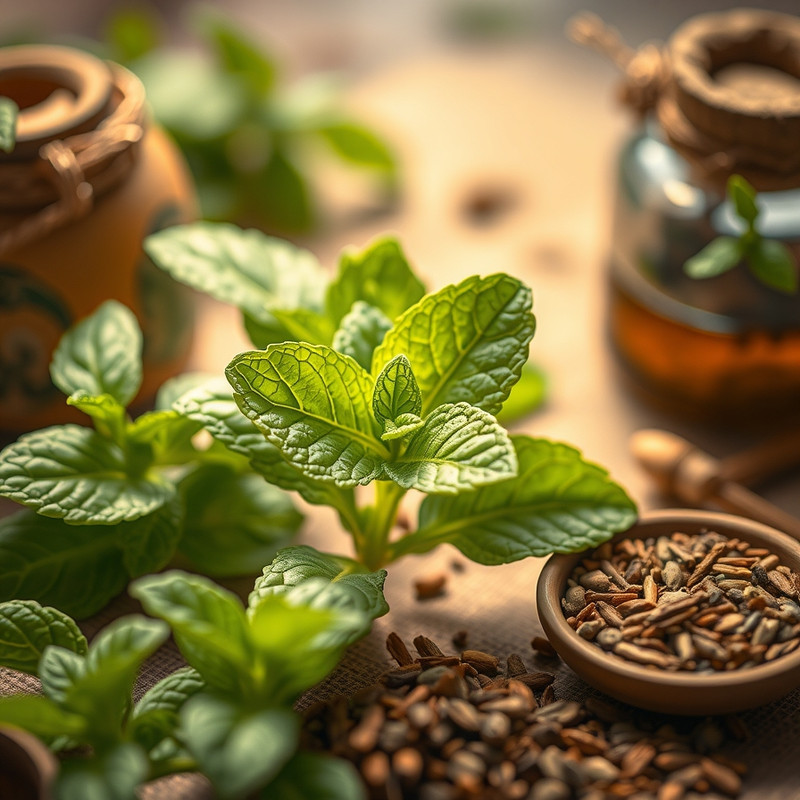
Peppermint
Description
A perennial aromatic herb with a creeping, quadrangular stem and glossy, sessile, toothed leaves. It is a hybrid with a spicy flavor (piper).
Key Properties & Benefits
Pharmacological and Physical Properties: Spearmint is recognized as an Antispasmodic (gastrointestinal and menstrual), Carminative, Digestive (eupeptic), Calming or sedative, and Antiseptic. It is also attributed properties such as analgesic, antifebrile (febrifugal), diuretic, antiemetic, and central nervous system (CNS) stimulant. The infusion of leaves is used orally to treat gastrointestinal, respiratory, nervous, and cardiac affections.
Basic Uses
Digestive: Carminative, antispasmodic, digestive, stomachic. Treats colic, diarrhea, flatulence, indigestion, nausea, vomiting, and stomach pain. Respiratory/Fever: Expectorant, febrifuge. Treats asthma, catarrh, cold, and cough. Nervous: Calming, treats insomnia and nervousness. Other: Analgesic, emmenagogue. Toothaches and liver and heart conditions.
Cultural Significance
Spearmint (Hierbabuena) is frequently mentioned for its use for nervous affections, implying a meaning of calmness and emotional relief. It is used to treat hysteria, nervousness, and insomnia. Scientific studies have shown the ethanolic extract has a CNS depressant action in goldfish and potentiates the effect of barbiturates in mice
Spiritual & Ceremonial Use
It is used in traditional recipes to relieve colic, where it is combined with other plants having ritual uses (such as Rue/Ruda and Epazote/Apazote). For example, a tea is prepared with Apazote twigs, Rue, and Spearmint leaves for colic pains. The juice of the spearmint mixed with vinegar was used to mitigate headaches.
Preparation Methods
Infusion or decoction (for internal use). Crush the leaves (for poultices/toothaches). Chew. Washes or compresses (topical use). It is sold as a tincture, elixir, and syrup.
Dosage Guidelines
Oral Infusion: 3-6 g/cup of infused leaves. Administer 2-3 times/day after meals for 3-4 weeks. Tincture: 1-3 ml of 1:10 tincture in 35% ethanol
Precautions & Warnings
No contraindications or adverse reactions have been reported for the species Mentha spicata L. The ethanolic extract of the leaves exhibits low toxicity.
Ethical Harvesting
It grows in sunny, humid, and temperate locations. Propagation: It spreads via stolons or runners and grows rapidly. Harvest: The leaves are collected at maximum foliage before flowering. They should be separated from the stem and dried in the shade at no more than 35°C. Two harvests per year are possible. Management or cultivation is recommended to ensure a continuous supply.