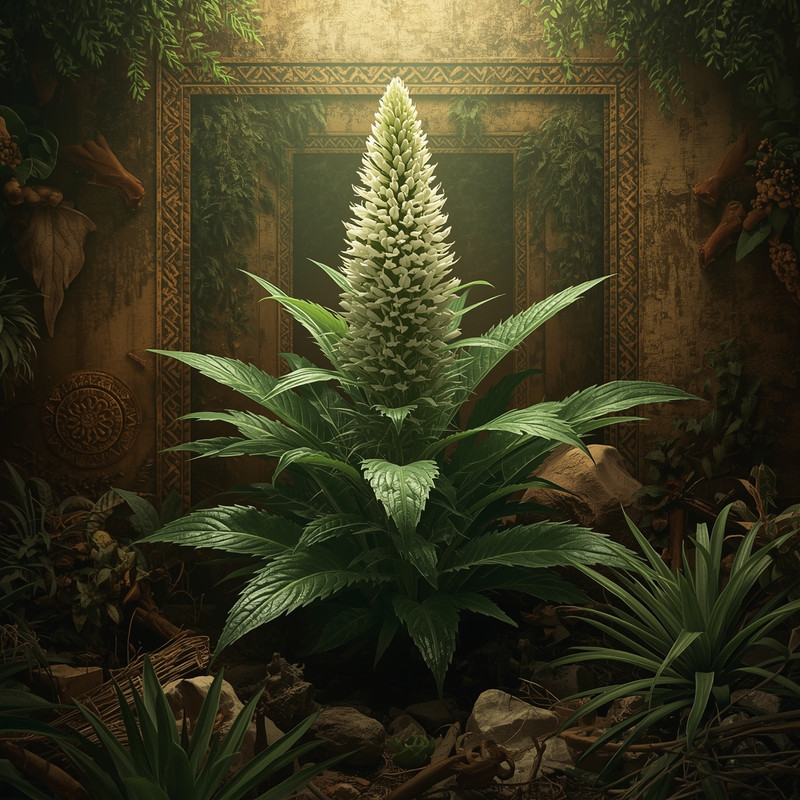
Epazote
Description
This annual or perennial herbaceous plant can reach up to one meter in height. It has aromatic leaves and is known for its strong characteristic fetid odor. The leaves are lanceolate, with a very short petiole, and are dotted with oil globules. Small, yellowish flowers grow in slender, long spikes or panicles in the leaf axils.
Key Properties & Benefits
It is classified as Anthelmintic (dewormer), antibacterial, antifungal, cicatrizant, spasmolytic, tonic, and diuretic. It is considered a "Caliente" (Hot) plant within the Mayan worldview.
Basic Uses
Internal Use: Treatment against intestinal worms/parasites, stomach pain/colic/flatulence, regulating the menstrual cycle, cleansing the kidneys, and treating malaria/paludism. External Use: To reduce inflammation and scar/heal wounds, and to treat skin fungi, grains with pus (abscesses/boils), and skin ulcers.
Cultural Significance
The leaves are used to season/flavor foods, particularly black beans and broths. It is an ingredient (along with garlic) used to manage the Mayan concepts of Hot, Cool, and Cold, ensuring the food is good for the body.
Spiritual & Ceremonial Use
The small branches or twigs are used for cleansing the evil eye (limpiar el mal de ojo). Crushed leaves can be placed in the nose to help in cases of fainting or seizures/attacks (desmayos o ataques).
Preparation Methods
Internal: Infusion or decoction (tea) made from the tender shoots (cogollos) or leaves. Cinnamon, sugar, and sometimes spearmint (hierbabuena) can be added. For parasites, the leaves are crushed to obtain the juice (horchata or extract). For scarring: Dried leaves are ground on a comal (griddle), and the resulting powder is applied directly to the wound.
Dosage Guidelines
For Parasites (Infusion): 1 leaf (children 2–8 years); 2 leaves (children > 8 years); 3 leaves (adults). To be drunk on an empty stomach for 3 days. Maximum Dose (Internal Use): 100g of fresh leaves and flowers per 1.5L of water (5-minute decoction). Adults: 3 cups (450ml total) per day. Children over 3 years old: 1 cup (150ml) in three doses. Purge: A saline or oil purge must be taken on the fourth day.
Precautions & Warnings
Apazote is an abortifacient. Internal use is not recommended for pregnant women, the elderly, and children younger than 3 years or children younger than 2 years or 3 months. The use of the essential oil (concentrated extract) can cause intoxication, including death in extreme cases. It must be consumed moderately to avoid severe neurological problems.
Ethical Harvesting
It grows wildly (Cimarrona) in family gardens and in the remaining natural areas (montañitas). It is important to protect these natural areas as they function as reservoirs of medicine and food. It is propagated by seed.