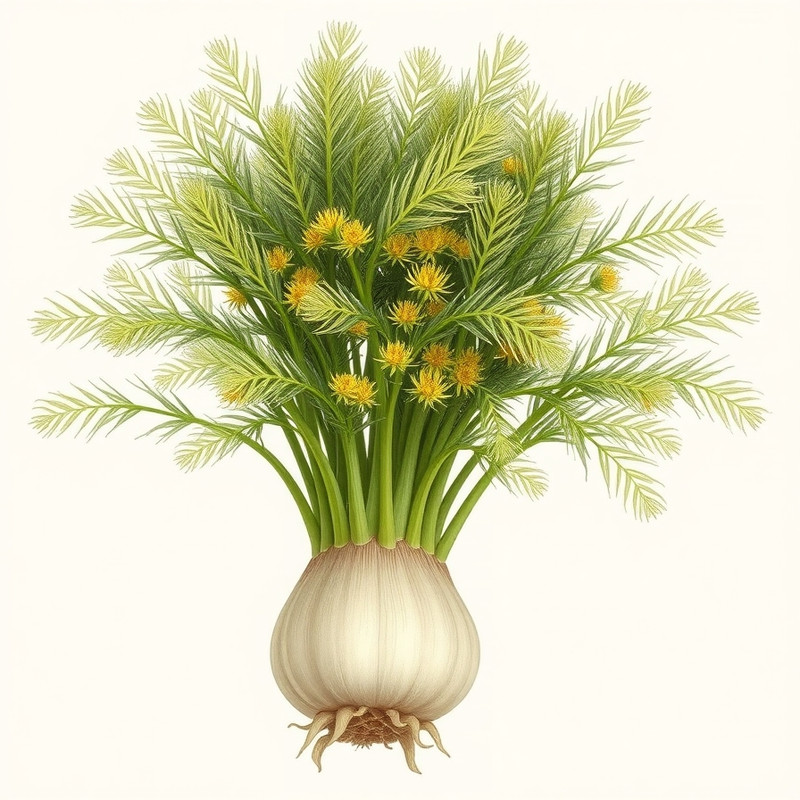
Fennel
Description
It is a perennial herb that can reach 2 meters in height. It has an erect, grooved, shiny stem with bluish stripes. Its leaves are dissected, with long, fine, hairy segments. The flowers are small, yellow, and grow in umbels. The fruit is an aromatic, compressed, doubly grooved schizocarp.
Key Properties & Benefits
The fruit is an appetite stimulant, digestive aid, diuretic, carminative, general tonic, emmenagogue, expectorant, mucolytic, antispasmodic, laxative, galactagogue (milk stimulant), and vermifuge. The leaf is vulnerary and contains a hypotensive principle. It is also attributed with antiseptic, balsamic, sudorific, fungicidal, and pectoral properties. The ethanolic extract of the fruit has anti-inflammatory activity.
Basic Uses
Internal Use: To treat diarrhea and colic in babies and children. Relieves bloating, flatulence, stomach pain, vomiting, and nervousness. Also used for amenorrhea, nephrosis, toothache, and the common cold. Used to combat anemia (fruit wine). Included in preparations for stomach aches along with leaves of the master herb, rue, mugwort, and garlic. External Use: To treat blepharitis and conjunctivitis (as eye drops), pharyngitis, and gingivitis (as a gargle).
Cultural Significance
Fennel has been cultivated since the times of the Egyptians, Greeks, and Romans. The term foeniculum comes from Latin and means "fragrant hay." It is mentioned by Hippocrates, Theophrastus, Galen, Pliny, and Dioscorides.
Spiritual & Ceremonial Use
El hinojo tiene un uso espiritual y ceremonial muy relacionado con la protección contra malas energías, mal de ojo y ataques externos. En la antigüedad, se colgaban ramos de hinojo en puertas y ventanas como amuletos para alejar las malas energías y proteger el hogar. Además, se empleaba en rituales para atraer suerte, abundancia, confianza y dinero, así como para la purificación espiritual.
Preparation Methods
An infusion or decoction (boiled) of the leaves, fruit, or seeds. It is also prepared as a tincture and syrup. In Colombia, a decoction of the fruit or seeds is used to treat bronchitis, abdominal pain, and colic.
Dosage Guidelines
For oral infusion (traditional): Steep 3 sprigs or 1 tablespoon of seeds per cup of water. Drink three cups a day: one in the morning, one at midday, and one at night. Pharmacopoeia dosages (internal use): 2-5 g/cup of leaf infusion, or 1-2 g/cup of fruit decoction.
Precautions & Warnings
Fennel is not toxic at therapeutic doses (less than 400 mg/kg). However, high doses should be avoided during pregnancy. Important Warning: Fennel essential oil is contraindicated during pregnancy and breastfeeding. This contradicts the popular and traditional belief that consuming fennel while breastfeeding can cure colic in infants through breast milk.
Ethical Harvesting
It is propagated by seed. Ripening is irregular; to reduce seed loss, the stems should be broken and, after 14 days, the final cut made. The fruits are harvested before ripening and dried in the sun; the roots are dug up before the rains and dried in the shade.