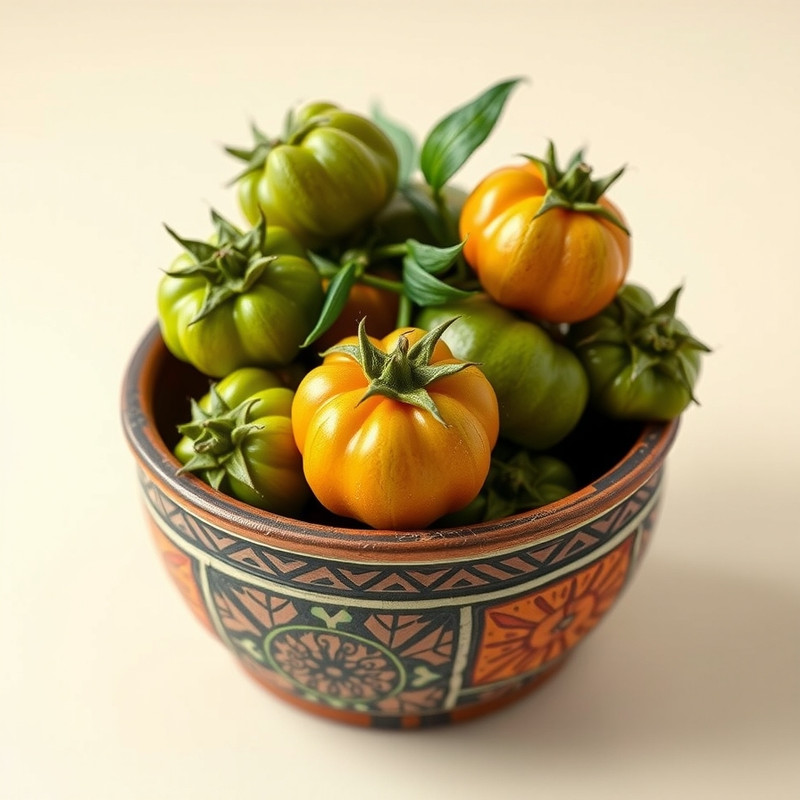
Tomatillo
Description
Herb up to 1 m tall. The leaves are alternate, coarse, and wavy. The flowers are yellow. The fruit is globose, 15-20 mm in diameter, smooth, sticky, somewhat acidic, and green, enclosed by the grooved calyx.
Key Properties & Benefits
It has antiemetic, antiseptic, anti-inflammatory, diuretic, emollient, spasmolytic, febrifuge, laxative, and odontalgic properties. The alcoholic extract is active against bacteria that cause respiratory infections (S. aureus, S. pneumoniae, etc.).
Basic Uses
Medicinal: Used to treat intestinal infections, stomach inflammation, cleanse the kidneys, and regulate the menstrual cycle (a decoction of the plant). Historically, it was used for blisters, tongue burning, lacrimal fistulas, and excessive menstrual flow. Edible: The fruit (unripe or ripe) is highly prized and is the base of many traditional green sauces.
Cultural Significance
It has a millennia-old tradition in Mesoamerica as an edible fruit, forming the basis of many Aztec and Mayan dishes. It was domesticated and promoted as a garden crop after the conquest.
Spiritual & Ceremonial Use
The miltomate is known spiritually and ceremonially as a symbol of fertility, abundance, and prosperity, especially linked to the milpa and productive land in Mesoamerican cultures. Its name in Nahuatl, "miltomatl," literally means "tomato of the milpa," referring to its importance in traditional agriculture and in rituals related to planting and harvesting.
Preparation Methods
Internal Use: It is taken as a decoction (tea) made from the water used to cook the whole plant or the buds. The fruit is eaten raw in sauces.
Dosage Guidelines
For intestinal infections and inflammation, take a cup of the water from cooking the whole plant or six buds for nine days.
Precautions & Warnings
No information was found on the toxicity of any of the Physalis species, and the widespread popular use of the fruits as food is an indication of safety. No contraindications or adverse reactions have been reported.
Ethical Harvesting
The plant is obtained through artisanal cultivation and by harvesting from wild fields in the Altiplano. The corolla-bearing fruits are collected at the beginning of ripening and are then ripened and dried in the sun. Promoting its cultivation is recommended to ensure a sustainable supply.