Cathedral bells
Description
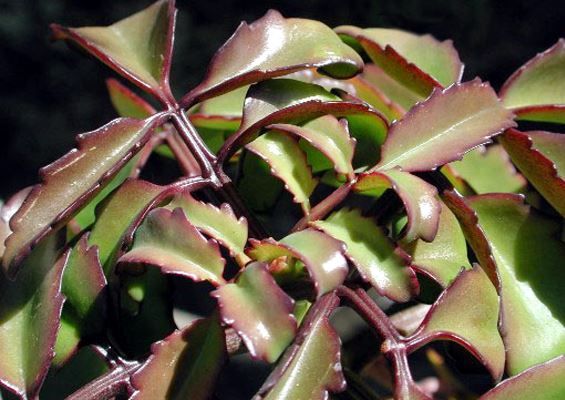
It is a hairless, perennial herb that grows up to 1 meter tall. It has fleshy, oval-shaped leaves up to 15 cm long. Its flowers, which can be greenish, yellowish, or reddish, are arranged in clusters on long inflorescences. The fruits are small and elongated. It blooms from November to April.
Key Properties & Benefits
The key properties of Kalanchoe pinnata include antitumor, anti-inflammatory, antihistamine, and immunomodulatory effects. It is recognized for its ability to treat infections, inflammation, and burns, and to prevent ulcers and rheumatic diseases. It is also effective against the parasite that causes leishmaniasis, a cutaneous and systemic disease. Furthermore, it contains flavonoids with antioxidant activity and bufadienolides that contribute to its anticancer properties. The juice from its leaves is used to promote wound healing and relieve respiratory problems such as coughs and bronchitis. It has also been used to improve digestion and nourish the skin, thanks to its antioxidant content.
Basic Uses
Swelling of feet and bruises. To reduce fever (by applying the ground plant along with its juice to the abdomen). For burns (using the squeezed or ground leaf). It is also used to treat tumors, skin sores, and wounds. It can be boiled to treat menstrual cramps.
Cultural Significance
In ancient Egypt, it was used as a narcotic. Kalanchoe pinnata has a spiritual significance primarily associated with good luck, prosperity, and protection. In various cultures, this plant is believed to attract positive energy and act as a protective shield against negative vibrations, fostering an atmosphere of harmony and well-being in the home.
Preparation Methods
For bruises and swollen feet: soften a leaf with your hands (using gentle movements) and place it on the affected area. For respiratory illnesses, poultices are made with boiled leaves. For tumors, sores, and wounds, compresses are made with the leaves.
Dosage Guidelines
Oral use (for gastritis or menstrual cramps): Boil 30 grams of leaves per liter of water, drink three glasses per day. Renew compresses and poultices twice a day.
Precautions & Warnings
Driving while ingesting this plant is not recommended due to its sedative effect. It is crucial to avoid the plant during pregnancy because it can inhibit labor. The plant is not toxic to humans, but it is toxic to livestock.
Ethical Harvesting
The ethical way to harvest Kalanchoe pinnata involves practices that ensure the plant's sustainability and conservation. It is recommended to collect only healthy, thick leaves, avoiding damage to the mother plant, as this plant can easily regenerate from cut leaves, allowing for repeated harvesting without compromising its growth. Furthermore, it is advisable not to cut large quantities of the plant at once to allow for its natural recovery.