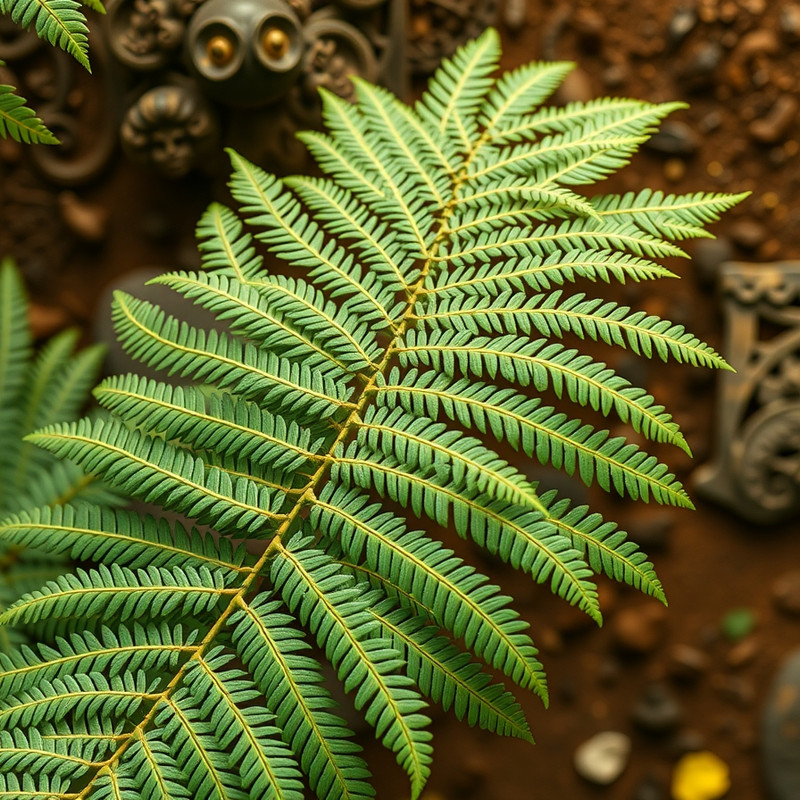
Calahuala
Description
It is an epiphytic or terrestrial fern. The rhizome (the part used) is creeping and golden-yellow in color, covered with dark scales. The leaves are large and pinnate, measuring 30-90 cm long.
Key Properties & Benefits
It is attributed with antipsoriatic, antirheumatic, purifying, and diaphoretic properties. It is a potent immunomodulator. The root is anti-inflammatory and analgesic.
Basic Uses
Oral: Treatment of liver conditions, rheumatism, arthritis, psoriasis, allergies, kidney stones, and edema (historical use). Topical: For pain relief, treatment of traumatic injuries, and rheumatism. Also used in inhalations for nasal congestion.
Cultural Significance
Clinical trials since the beginning of the 20th century have attributed to it efficacy in the treatment of kidney stones and edema.
Spiritual & Ceremonial Use
Calahuala holds profound spiritual significance in indigenous traditions such as those of the Huichol, where it is considered a sacred plant that helps maintain balance between the spiritual and physical worlds. In ceremonies, calahuala is used to connect with the divine, facilitating spiritual protection, purification, and healing of both body and spirit.
Preparation Methods
Oral use: Decoction of the rhizome. Topical use/inhalation: Ointment, salve, or gel for inflammation. Crushed leaves or roots for inhalation to relieve nasal congestion.
Dosage Guidelines
Oral use (Decoction): 1-4 g/cup, administered 2-3 times/day after meals for 4-6 weeks. Inhalation: 5-10 g/day of crushed leaves or roots for nasal congestion.
Precautions & Warnings
No contraindications were found, and no adverse reactions have been reported. However, combined use with cardiotonics is not recommended.
Ethical Harvesting
It is obtained by harvesting from the wild. A progressive decline in the resource has been detected, therefore management, domestication, and cultivation activities are recommended to ensure its availability. The rhizome is collected at the end of the rainy season or the beginning of the dry season and should be dried in the shade or with forced hot air at less than 60°C.