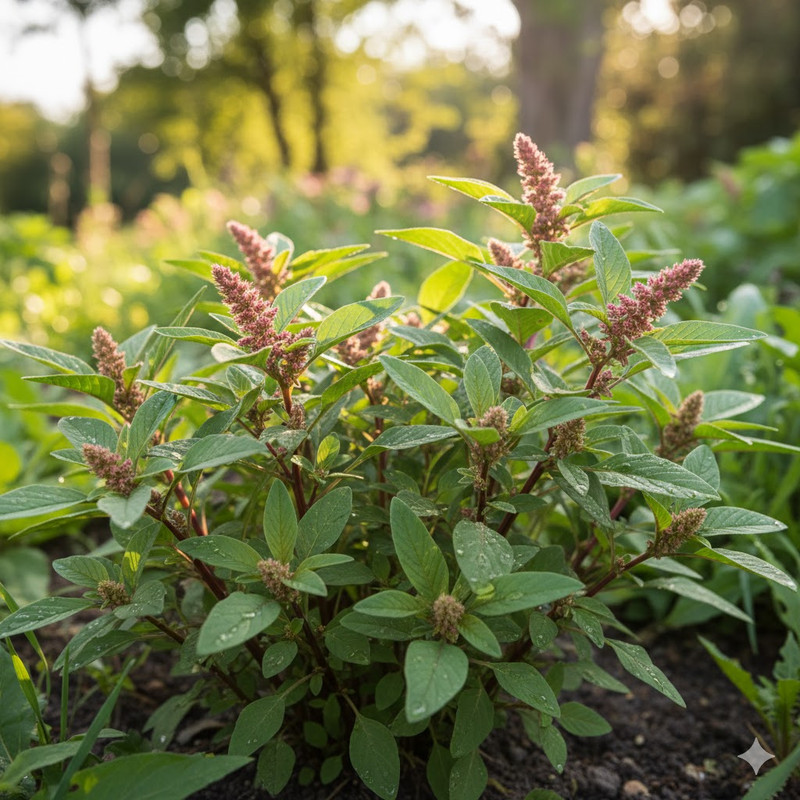
Redroot pigweed (pigweed)
Key Properties & Benefits
Nutrient-dense: vitamins A and C, minerals (calcium, iron, magnesium), and protein (especially seeds). Astringent/demulcent: leaf infusions traditionally used for diarrhea and internal bleeding. Anti-inflammatory and soothing effects on digestive mucosa reported in folk use; clinical evidence is limited
Basic Uses
Culinary: cooked leaves in stews, soups, sautés; seeds used popped, in sweets, or as grain. Traditional medicinal: leaf infusions/decoctions for diarrhea, internal bleeding, gargles for hoarseness; poultices for wounds/skin issues. Agro/ecological: hardy crop contributing to food security on poor soils.
Cultural Significance
Amaranth (including bledo) has deep roots in Mesoamerica: seeds and leaves were staple foods and used ceremonially in pre-Hispanic cultures. Among Maya and rural communities, local amaranth varieties symbolize resilience, home foodways, and cultural continuity. Interest in it has revived for food security and ancestral knowledge preservation
Spiritual & Ceremonial Use
Historically, amaranth seeds were used in ritual offerings and ceremonial foods in Mesoamerica (symbolizing seed, life and renewal). In contemporary local practice it may be used in ceremonial baths, offerings, or as a symbol of healing and communal strength—usage varies by community and should be documented with local knowledge holders.
Preparation Methods
Infusion (tea): 1 handful fresh leaves or 1–2 g dried leaves per cup (250 mL) — pour near-boiling water, steep 5–10 min, strain. Drink 1–2 cups daily for mild digestive uses. Decoction: boil leaves (or roots) 5–10 min for poultice or wash. Poultice: crush cooked leaves and apply to wounds/inflammations. Culinary: sauté tender leaves with garlic/onion; include in soups; seeds toasted/popped for snacks.
Dosage Guidelines
Infusion (for mild digestive/astringent use): 1 teaspoon dried leaves (≈1–2 g) or one handful fresh per cup (250 mL) of hot water. Steep 5–10 min. Drink 1–2 cups per day. (For gargles, prepare ~1 quart and gargle 3×/day). Decoction for poultice/bath: boil plant 5–10 minutes; cool to safe temperature and apply externally. Duration: traditionally short courses (days–weeks); stop if condition worsens and consult practitioner.
Precautions & Warnings
Warnings: avoid in pregnancy unless supervised; watch for allergies; consult if on anticoagulant or other medications. Do not exceed recommended amounts without professional advice.
Ethical Harvesting
Bledo is more than a “useful plant”—it’s a living being that carries vital energy, nourishment, and medicine. In Maya and other Indigenous worldviews, harvesting is an act of reciprocity, not exploitation. Before cutting, one asks permission and gives thanks to the Earth and the plant spirit for their generosity. The guiding principle: “Take only what you need, and leave enough for life to continue.” Lunar phase: many Maya harvesters prefer the waxing or full moon, when plant energy and sap are strongest. Time of day: harvest early in the morning while leaves are fresh and before the heat of the sun. Healthy plants: choose vigorous, pest-free specimens. Avoid roadsides or polluted areas.