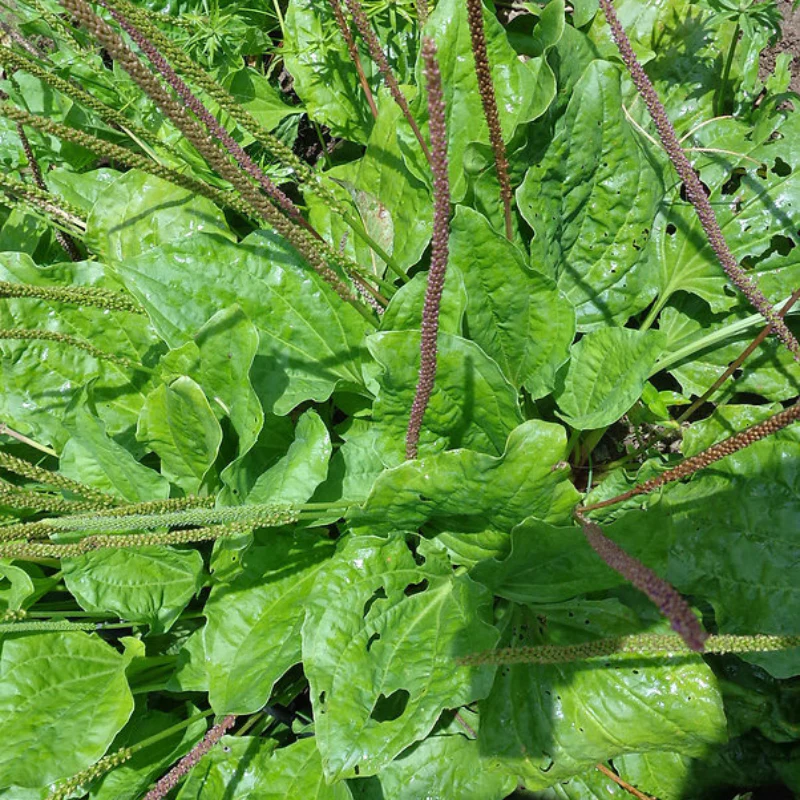
Broadleaf plantain
Description
It is a perennial herb with stems that reach up to 20 cm in height. It is characterized by having few leaves grouped in a basal rosette. The leaves are broad, oval, and 5 to 20 cm long. The flowers are small and greenish-white, grouped in spikes.
Key Properties & Benefits
It has anti-inflammatory, analgesic, and healing properties. It is also attributed with anti-ulcerogenic, antihistamine, antispasmodic, and antitussive properties. It is used to treat diarrhea, gastritis, coughs, and bronchitis.
Basic Uses
Internal Use: For the treatment of diarrhea, dysentery, gastritis, cough, bronchitis, and urinary tract infections (cystitis). External Use: For the care of infected wounds, boils, dermatitis, insect bites, conjunctivitis, and leg ulcers.
Cultural Significance
The name plantain comes from the Latin word "plantago," related to the sole of the foot, due to the shape and veins of its leaves, which resemble a foot. Historically, it has been considered a sacred or powerful plant in traditional medicine, used to heal wounds, relieve inflammation, treat respiratory ailments, and promote scarring, which is why it has been valued in both European and Indigenous American cultures.
Spiritual & Ceremonial Use
Plantain has a spiritual significance linked to healing and the relief of spiritual suffering. Traditionally, this plant is believed to help release emotional and spiritual burdens, acting as a purifier for both body and mind. In some cultures, plantain represents the search for deep healing, not only physical but also spiritual, facilitating a connection to states of peace and protection.
Preparation Methods
Internal: It is used as a decoction or infusion. For decoction, the plants are placed in boiling water and simmered for ten minutes. External: It is applied as a poultice, compress, or in baths and washes (decoction).
Dosage Guidelines
Internal Use: Boil or steep 5 leaves in one cup of water and drink 1 cup before each meal or several cups throughout the day. For kidney ailments, it is recommended to boil one tablespoon of chopped plant per cup of water and drink 3 cups a day.
Precautions & Warnings
The plant is not toxic. When treating kidney conditions, it should not be taken for more than three consecutive weeks.
Ethical Harvesting
It is obtained by harvesting from the wild in damp soil and along riverbanks. Cultivation is recommended to ensure a sustainable supply. The leaves should be collected during flowering and dried first in the sun for one day and then in the shade for 3-5 days.