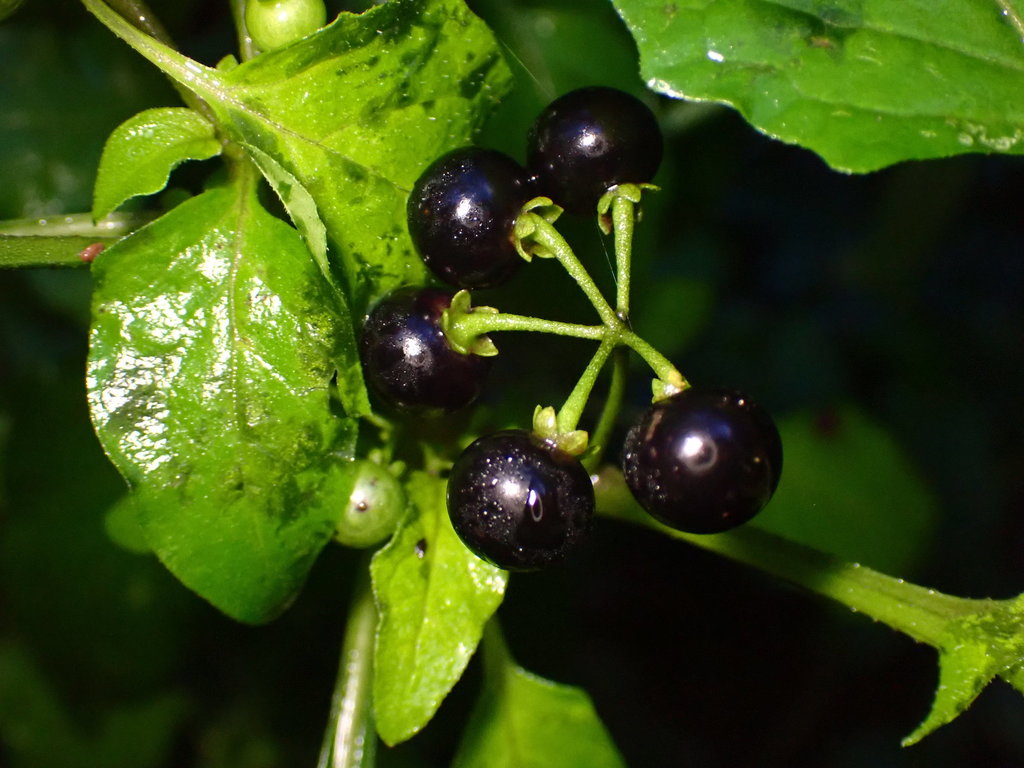
black nightshade
Description
Annual herb up to 1 m tall, with a pubescent stem. The leaves are lanceolate. It has white flowers and globose fruits that turn black when ripe, similar to small tomatoes.
Key Properties & Benefits
It contains alkaloids (solasodine), polycyclic unsaturated steroids, saponins, and tannins. Its antibiotic (fungicidal) activity is attributed to α-solanine. It has anti-inflammatory and vulnerary (wound-healing) properties.
Basic Uses
Medicinal: It is used to treat abscesses, boils, ringworm, and eczema. It is also used for inflammation and to purify the blood. Edible: The leaves are eaten as a vegetable.
Cultural Significance
It is a common herb used in the traditional diet (as an edible/vegetable)
Spiritual & Ceremonial Use
Black nightshade (Solanum nigrum) has a significant spiritual and ceremonial use in various cultural and spiritual traditions, especially in Afro-descendant and indigenous communities, and in Santería practices and syncretic religions.
Preparation Methods
Internal Use: The decoction is drunk to purify the blood. External Use: It is prepared as a poultice (paste of crushed fresh leaves) to apply to abscesses and boils. The decoction is used to wash skin affected by ringworm or eczema.
Dosage Guidelines
To purify the blood (internal use): Drink one glass of the decoction in the morning on an empty stomach for eight days (adults). For abscesses (external use): Apply the paste of crushed leaves directly to the abscess twice a day until it heals.
Precautions & Warnings
Garlic is often recommended in cooking as a blood-purifying remedy. The plant contains alkaloids (such as α-solanine), but its external use or dietary intake is traditionally reported.
Ethical Harvesting
The ethical harvesting of black nightshade (Solanum nigrum) requires careful and respectful practices to preserve the plant and its natural environment, as well as to ensure its availability for future medicinal and spiritual uses. Harvest only the necessary amount, avoiding excessive extraction that could weaken or significantly reduce the wild population. Preferably cut the upper parts of the plant, such as leaves and young branches, without uprooting the entire plant or damaging its roots, to allow for rapid regeneration.