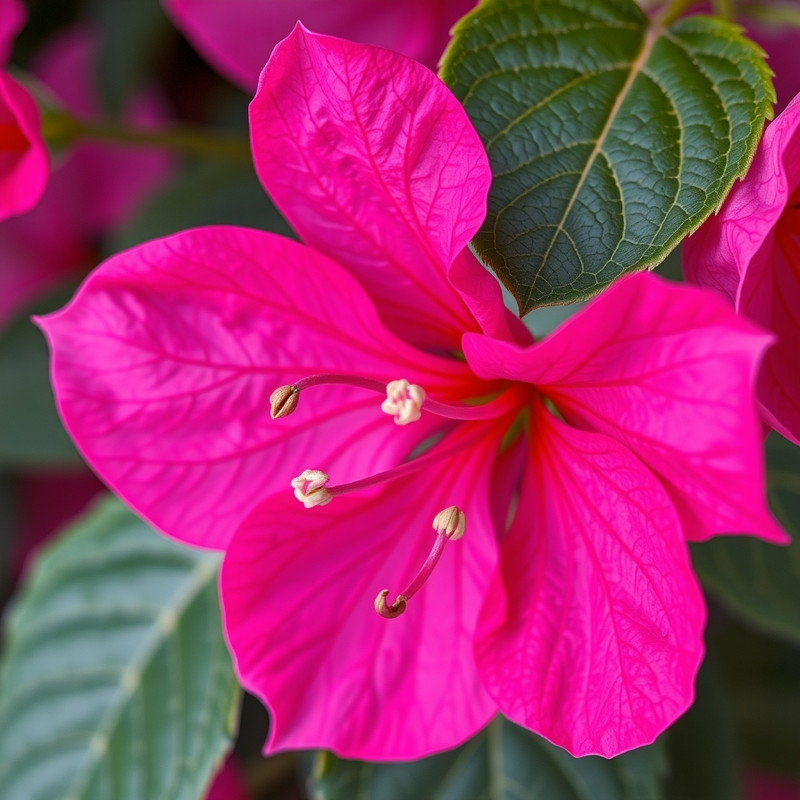
Bougainvillea
Description
A climbing plant, shrub, or vine. It has woody branches with strong, usually straight thorns. The true flower is small and yellow, but it is covered by brightly colored bracts (purple or other colors) that are often mistaken for the flower. It blooms from March to December.
Key Properties & Benefits
Vascular protector, antiradical, spasmolytic, antibacterial and antitussive (against cough). Contains flavonoids, saponin glycosides, tannins and indole alkaloids.
Basic Uses
Medicinal: Treatment for coughs. It is used for fright, in a tea prepared with red carnation flowers. To treat respiratory illnesses.
Cultural Significance
It is used as an ornamental plant in gardens. It is an ingredient in a traditional tea for treating fright.
Spiritual & Ceremonial Use
The spiritual meaning of bougainvillea includes passion, vitality, love, spiritual connection, protection, and resilience. Spiritually, it symbolizes strength and perseverance, reflecting its ability to flourish even in adverse conditions. Furthermore, it represents authenticity and self-expression, inviting one to be true to oneself and to reveal one's true inner beauty.
Preparation Methods
Internal use: Prepare by boiling the flowers. Alternatively, prepare an infusion by boiling the flowers with orange, cinnamon, oregano, and thyme, and drink it throughout the day. Gargle: The decoction can be used as a gargle. Tea for fright: Drink a tea made from bougainvillea flowers and red carnation flowers.
Dosage Guidelines
Dosage (Decoction): Boil 10 flowers in one liter of water. Drink three cups a day. For coughs, boil a few flowers in one liter of water and drink throughout the day.
Precautions & Warnings
Very low toxicity. However, experimentally demonstrated biological effects indicate that its use should be restricted in pregnant women and children.
Ethical Harvesting
A climbing plant grown for ornamental purposes. It is assumed that the material is obtained from the collection of flowers (bracts) from plants cultivated in gardens.